By Jaklin Sookiassian · November 3, 2026
The short answer: In Nevada, the driver who hits another car from behind is often found at fault, because drivers have to leave enough room to stop safely. It isn't automatic, though: a sudden stop for no reason, a cut-in, or brake lights that don't work can shift some of the fault, and Nevada's comparative negligence rule then decides how it's shared.
Schedule a free consultation: No attorney's fee unless we recover compensation for you. You may still be responsible for costs.
Being hit from behind usually feels simple. You were stopped or slowing, and someone ran into you. Most of the time, the claim does start from there. But the other driver's insurer may tell a different story, and in a crash with three or four cars, it can be hard to tell who hit whom. Below, we explain how fault is usually decided in a Nevada rear-end crash, when it can shift, and what evidence settles the question.
Why is the driver in back usually found at fault?
The driver in back is usually found at fault because Nevada expects every driver to leave enough space, and pay enough attention, to stop for whatever happens ahead. When a car runs into the one in front, that usually means one of those things was missing.
Three duties do most of the work:
- Following distance. Nevada law says a driver shouldn't follow another vehicle more closely than is reasonable and prudent, given the speed of the vehicles, the traffic and the condition of the highway (NRS 484B.127).
- Speed for conditions. A driver's speed has to be reasonable for the traffic, the road surface and the weather. A gap that is enough on a clear afternoon may be too short in rain or blowing dust (NRS 484B.600).
- Attention. A driver looking at a phone, a navigation screen or the back seat can miss the car ahead slowing down. Nevada's handheld-phone rule is covered on our car accident injury claims page.
So the rear driver is often found responsible for all or most of the harm. "Most" is the key word. The rear driver is usually at fault, but not always, and the details below can change the result.
Is the rear driver always at fault?
No. The driver in back isn't automatically at fault in Nevada. What the front driver did just before the impact can move part of the responsibility onto them.
Situations where the front driver may share fault include:
- Stopping suddenly for no traffic reason. For example, braking hard in a moving lane to read an address or check a phone.
- Brake-checking. Hitting the brakes on purpose to scare or punish the driver behind.
- Cutting in and braking. Moving into a gap that's too small, then slowing sharply, so the other driver has no room to react.
- Reversing. Backing up in a traffic lane, or out of a driveway or parking space, into a car that was stopped or moving forward.
- Stopping in a travel lane without hazards. Leaving a stalled or parked car in a live lane with no flashers or other warning, especially after dark.
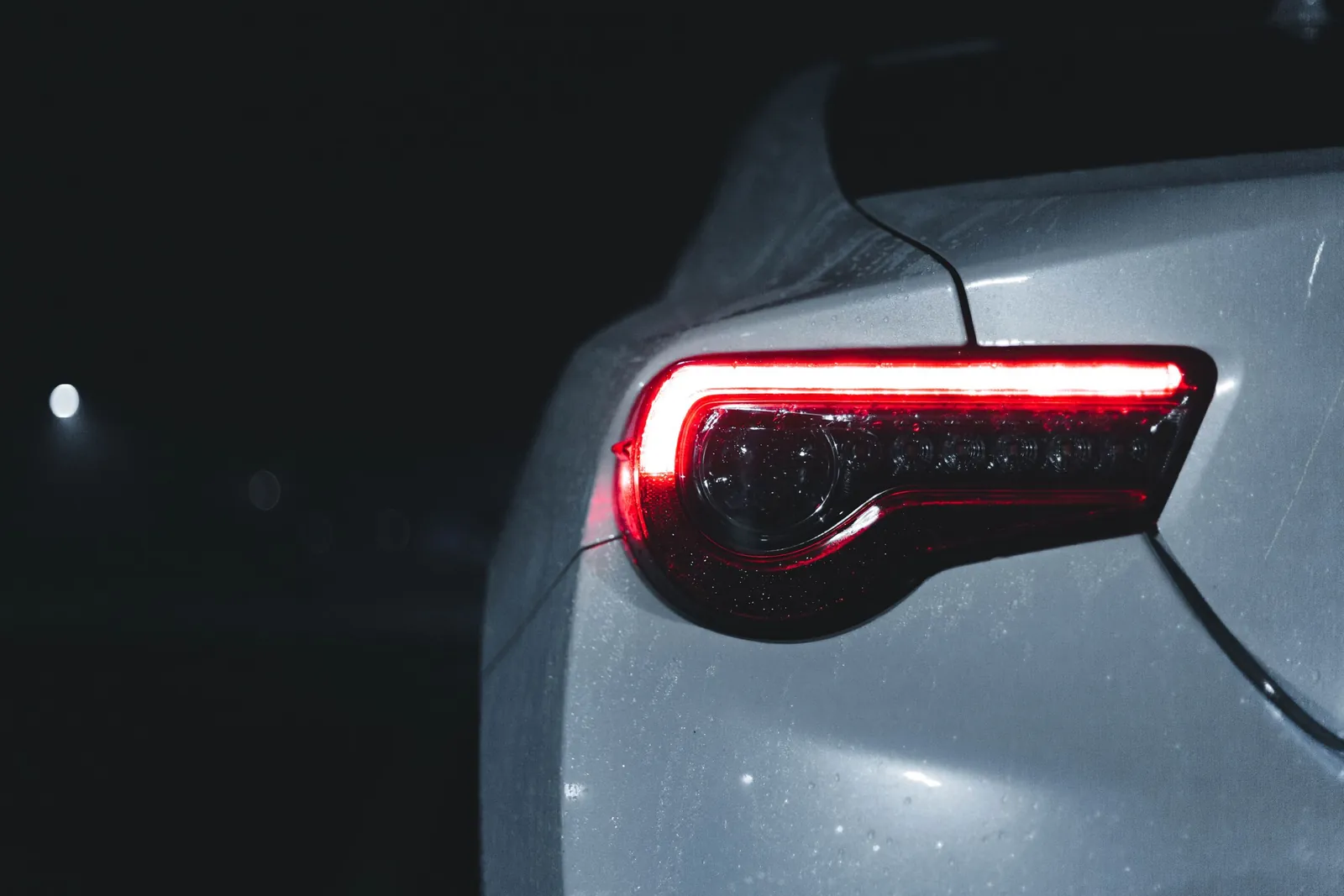
- Brake or tail lights out. Nevada requires working tail lamps and stop lamps (NRS 484D.115 and 484D.125). Lights that don't work can take away the warning the driver behind relies on.
Nevada law also says a driver shouldn't stop or suddenly slow down without first giving an appropriate signal to the driver immediately behind (NRS 484B.413(3)).
Each of these may shift some fault to the front driver. None of them cancels the rear driver's duty to leave room. How much any one of them counts depends on what the evidence shows.
Sudden stops and "brake checking": who is at fault?
A sudden stop usually doesn't excuse following too closely, because a safe gap is supposed to cover exactly that moment. A stop that was deliberate, or that had no reason behind it, is different and can shift some of the fault to the driver who braked.
Plenty of hard stops are normal driving: a light turns yellow, a pedestrian steps out, or the car ahead brakes. The driver behind is expected to handle those. Brake-checking is something else. It's a choice to slow down with nothing in the way, usually to send a message to the car behind.
These claims are hard to sort out because they happen in seconds, and the two drivers often describe them in opposite ways. That's where outside proof helps most:
- Dashcam video can show whether there was a light, a car or nothing at all ahead of the front driver.
- Witnesses in other lanes may have seen brake lights flash with no traffic ahead, or seen the drivers' behavior in the minutes before.
If the other insurer says you "stopped short," see what insurers may argue, below.
Who is at fault in a chain-reaction rear-end crash?
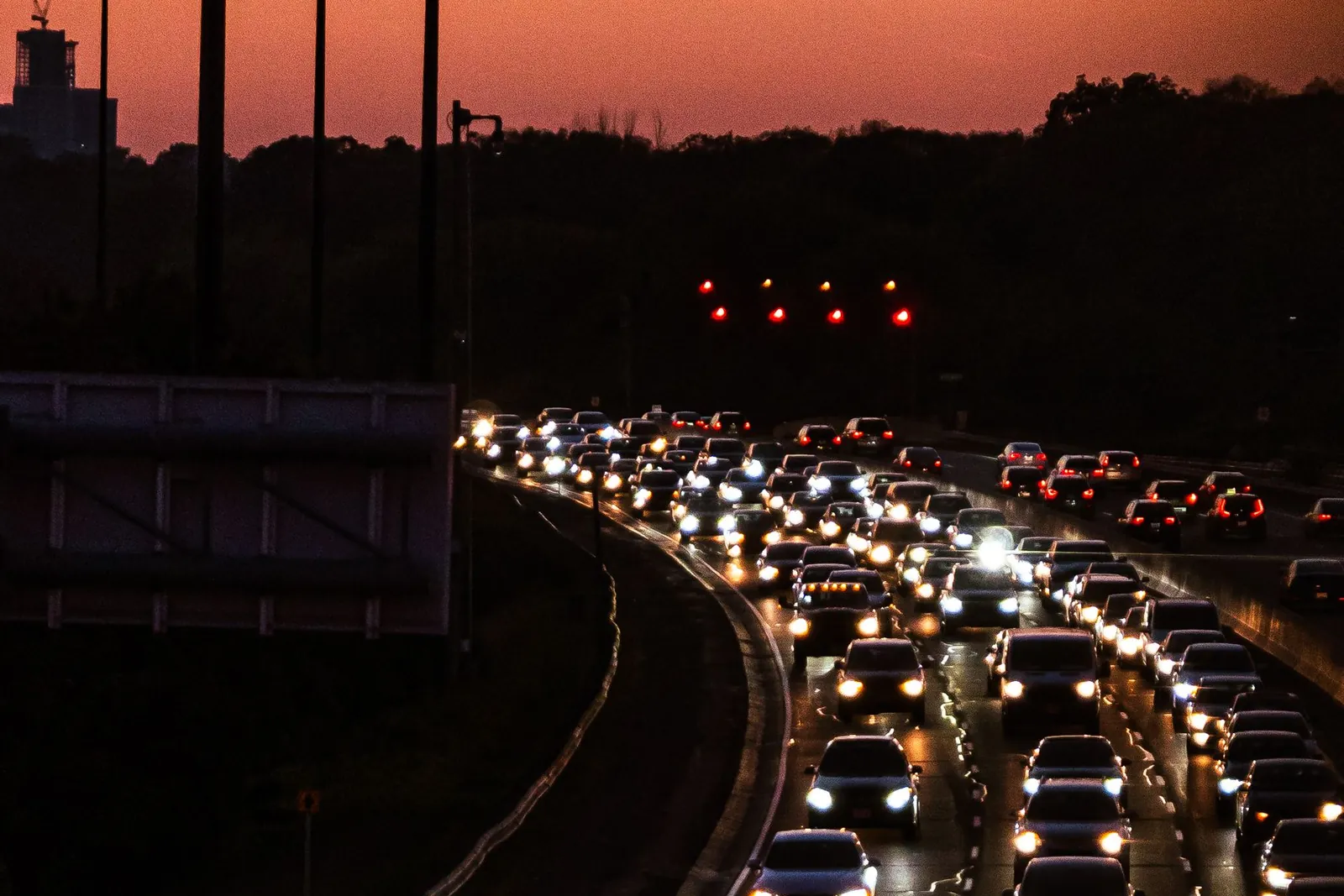
In a chain-reaction crash, fault is traced one impact at a time: which car hit first, and whether each car in the middle was pushed forward or ran into the car ahead on its own.
Picture three cars stopped in a line. The last car hits the middle car and shoves it into the front car. The middle driver did nothing wrong in that version, because the force came from behind. Now change one detail: the middle car had already hit the front car a moment before the last car arrived. Then the middle driver may be responsible for the front impact, and the last driver for the rear one.
The middle driver is often hit twice, once from behind and once in front, and each impact may trace back to a different person. Because several drivers can be involved, several insurers can be too, and each may point at someone else. Working out the order of impacts usually comes first. The damage, where the cars came to rest, what witnesses saw and any video all help.
Nevada compares fault among everyone involved. The next section covers that rule and links to our full guide.
Chain-reaction crashes tend to come from stop-and-go traffic, the kind found on I-15, US-95 and the 215 Beltway, and in the backups near the I-15/US-95 interchange (the "Spaghetti Bowl"). Visitor and rental-car traffic, sudden slowdowns near freeway exits, and dust or rain that cuts visibility can all shrink the time a driver has to react.
When fault is shared: Nevada's rule in brief
When both drivers share fault, Nevada uses a comparative negligence rule (NRS 41.141). If your share of the fault is 50 percent or less, you can still recover, but the amount goes down by your share. If you are more than 50 percent at fault, you can't recover. Our guide to comparative negligence in Nevada walks through how the rule works, including crashes with more than one at-fault driver.
Fault is one of the things that affects what a claim may be worth. See what a car accident case may be worth in Nevada.
What evidence shows how a rear-end crash happened?
The most useful evidence in a rear-end case shows the moments before impact: where each car was, how fast the gap closed, and what the front car was doing.
- Where the damage is on each vehicle. Damage straight across one car's rear and the other's front may point to a straight-line impact. Damage to a corner may support a cut-in or a lane change just before the crash.
- Dashcam video. Yours, the other driver's, or one in a nearby rideshare or work vehicle.
- Nearby business or home cameras. Gas stations, stores and doorbell cameras sometimes catch the road. Footage may be recorded over, so ask early.
- Witnesses. Especially people in other cars who don't know either driver.
- Photos of the brake lights. Pictures of both cars' lights, taken before repairs if possible, can show whether they were intact.
- Phone-use records. When distraction is in question, these may be requested through proper legal process.
- The crash report. In Las Vegas and unincorporated Clark County, the report usually comes from the Las Vegas Metropolitan Police Department (LVMPD). On highways, including I-15, the Nevada Highway Patrol (NHP) may take it instead. The report notes where the cars ended up and what each driver said.
- Vehicle data. Information from a vehicle's onboard systems may be requested through proper legal process.
For what to do at the scene, and why it matters that Nevada is an at-fault state, see what to do after a car accident in Las Vegas.
What insurers may argue after a rear-end crash
After a rear-end crash, the other driver's insurer may agree that its driver hit you but still argue that you caused part of it, or that you weren't really hurt.
- "You stopped short." This is the most direct way to move fault onto the front driver. The answer is evidence: video, witnesses, and what was actually ahead of you.
- "Low damage means no injury." The size of a dent and whether a person was hurt are separate questions, and injuries aren't always visible right away. The after-a-crash guide linked above covers getting checked.
Before you give the other driver's insurer a recorded statement or sign anything, read should you talk to the insurance adjuster?
Does a ticket or the police report decide fault?
No. A traffic ticket and the police report are important evidence, but they aren't the final word on fault in an insurance claim or a lawsuit. The officer usually arrives after the crash and works from what the drivers say, where the cars stopped, and what can be seen. A ticket for the rear driver may help your claim. No ticket doesn't mean no fault, and a ticket for you doesn't by itself end your claim. Whether a ticket or the report's conclusions can be used in court depends on the rules of evidence, and insurers look at the whole picture.
Special situations
- Rear-ended by a truck? See who is liable in a Nevada truck accident.
- Hit from behind on a motorcycle? See our motorcycle accident injury page.
- Riding in an Uber or Lyft? See who pays after an Uber or Lyft crash in Las Vegas.
- Visiting Las Vegas? See hurt in a car accident while visiting Las Vegas.
- The driver left the scene? See hit-and-run claims and uninsured motorist coverage.
- Serving Summerlin: Summerlin car crash claims.
- Serving Henderson: Henderson personal injury claims.
How we help after a rear-end crash
We help by building a clear record of how the crash happened, dealing with the insurers, and keeping you informed at each step.
- Gathering the record. We request the crash report and collect your photos and any video.
- Preservation requests. We ask businesses, drivers and insurers that may hold footage or other records to keep them.
- Talking with insurers. We handle the calls and letters, so you aren't answering fault questions on your own.
- Reviewing every offer with you. No offer is accepted until you understand it and decide.
We provide personalized attention to every client. Attorney Jaklin Sookiassian spent 2 years at Fried Frank, an AmLaw 100 firm in New York.
In Nevada, you generally have two years from the date of the injury to file a personal injury lawsuit (NRS 11.190(4)(e)). Claims against government entities are subject to special procedural rules and notice requirements under Nevada law. See how long you have to file a personal injury claim in Nevada.
Frequently asked questions
Is the driver who rear-ends someone always at fault in Nevada?
Usually, but not always. Drivers must leave enough room to stop safely, but the front driver's conduct, such as a pointless sudden stop or a cut-in, can shift some of the fault.
Can I be partly at fault if I was rear-ended?
Who pays in a chain-reaction crash?
It depends on who hit whom. Each impact is traced back to the driver who caused it, so more than one driver, and more than one insurer, may be responsible. Nevada's shared-fault rule, explained in the answer above, then applies.
The other driver says I brake-checked them. What happens?
Does the police report or a ticket decide who's at fault?
No. Both are important evidence, but an insurance claim or a court looks at all the evidence, not just the report or the ticket.
How much does a consultation cost?
The consultation is free. No attorney's fee unless we recover compensation for you. You may still be responsible for costs.
Contact The Sookiassian Firm, Ltd.
The Sookiassian Firm, Ltd.
1980 Festival Plaza Dr, Suite 460, Las Vegas, NV 89135 (Downtown Summerlin)
(702) 518-8584. Open daily, 8 AM–6 PM.
Serving Las Vegas, Summerlin, Henderson and North Las Vegas.
We speak English, Armenian, Russian, and Farsi (Persian).
Schedule a free consultation: No attorney's fee unless we recover compensation for you. You may still be responsible for costs.
This post is for general informational purposes only and does not constitute legal advice. It is not intended as specific legal advice for any individual case or situation. See our Terms of Service & Attorney Disclaimer.
Attorney Jaklin Sookiassian is responsible for the content of this website. The Sookiassian Firm, 1980 Festival Plaza Dr, Suite 460, Las Vegas, NV 89135.