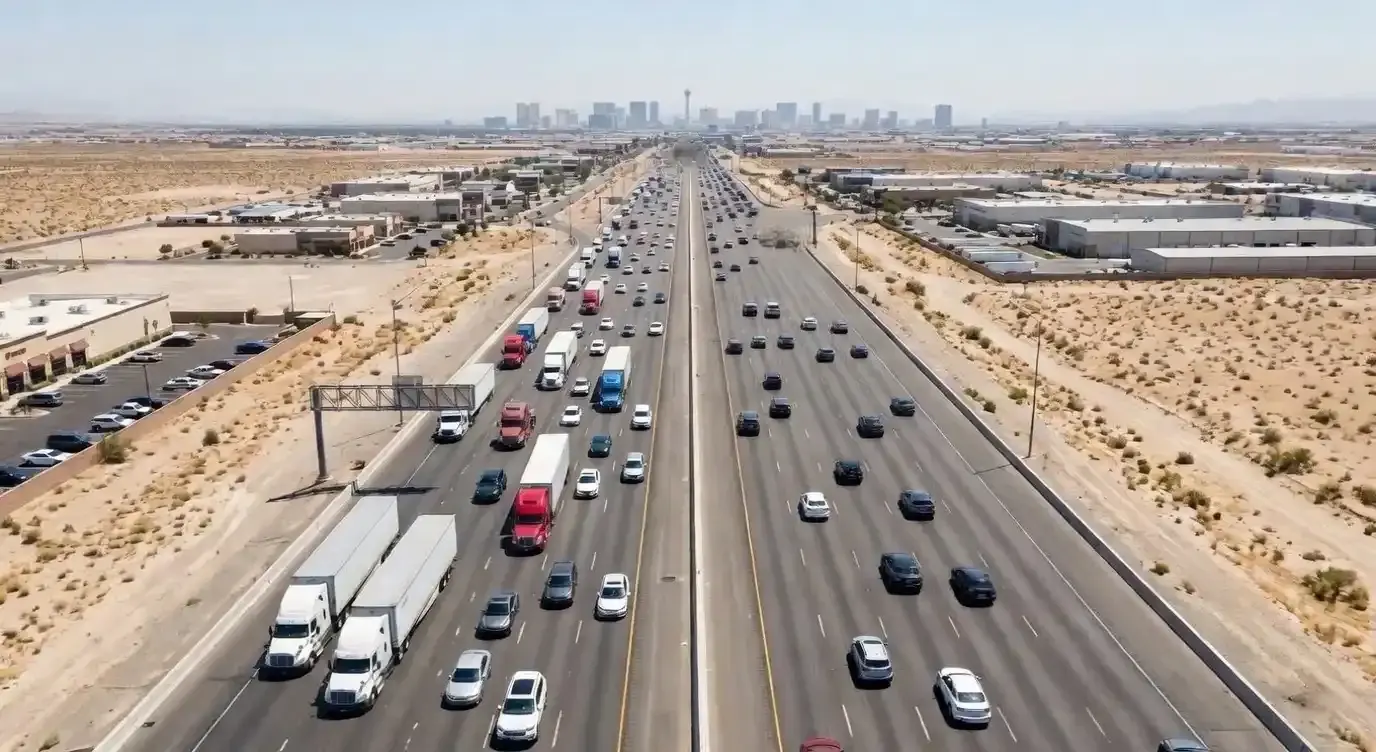
In a Nevada truck accident, more than one party may be legally responsible: the truck driver, the trucking company, and sometimes a cargo loader, maintenance company, parts manufacturer, or government entity. Who is liable depends on the facts, including whether the driver was working for the company and what the company's records show.
If you were hurt and want to talk about your own case, see our Las Vegas truck accident lawyer page.
Injured in a Truck Accident?
Contact The Sookiassian Firm at (702) 518-8584 for a free consultation.
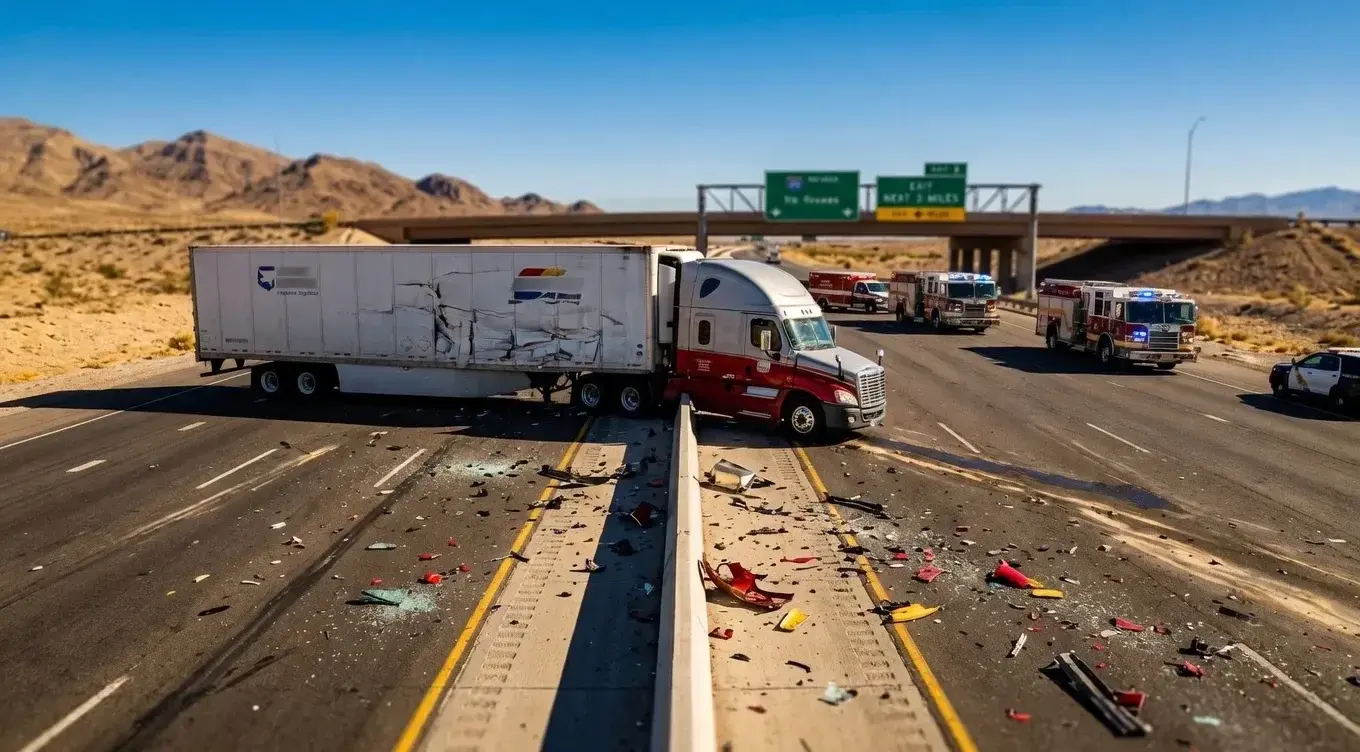
Why truck crashes often involve more than one responsible party
In a crash between two cars, the main question is often which driver made a mistake. A truck crash can be different. Many truck drivers haul loads for a trucking company, also called a motor carrier. Other businesses may play a part too. One company may load the cargo. Another may repair the brakes or tires. Another may have built the truck or one of its parts.
Federal safety rules from the Federal Motor Carrier Safety Administration (FMCSA) add more duties. These rules cover how long drivers may drive, how trucks are inspected and maintained, and when drivers are tested for drugs and alcohol. After a crash, each of these duties can point to someone who may share fault. The sections below look at each one.
The truck driver
If the truck driver was careless, for example driving while tired, distracted, or impaired, the driver can be held personally liable for the injuries that carelessness caused (NRS 41.130).
Driver Fatigue
Commercial truck drivers face immense pressure to deliver loads on tight schedules, and some drivers — or their employers — cut corners on mandatory rest periods.
Federal Hours of Service (HOS) regulations, enforced by the Federal Motor Carrier Safety Administration (FMCSA), set strict limits on how long truck drivers can operate their vehicles:
- 11-hour driving limit: A driver may drive up to 11 hours after 10 consecutive hours off duty.
- 14-hour window: A driver may not drive after the 14th consecutive hour after coming on duty.
- 30-minute break: A driver may not drive once 8 hours of driving time have passed without at least a 30-minute interruption.
Most motor carriers must have their drivers record duty status with an electronic logging device (ELD) (49 CFR 395.8(a)).
Impaired Driving
49 CFR Part 382 requires pre-employment drug testing (382.301), random testing (382.305), and post-accident testing in certain crashes (382.303).
The trucking company: two ways it can be responsible
Liability for a driver on the job
Under the legal doctrine of respondeat superior, an employer can be held liable for the negligent actions of its employees while they are acting within the scope of their employment. This means the trucking company may be responsible for a driver's negligence — not just the driver individually.
The company's own negligence
Beyond respondeat superior, a trucking company can also be held directly liable for:
- Negligent hiring: Hiring a driver with a poor safety record, inadequate training, or disqualifying medical conditions.
- Negligent maintenance: Failing to inspect and maintain vehicles according to federal standards.
- Pressure to violate HOS rules: Encouraging or requiring drivers to exceed their legal driving hours.
Other parties who may share fault
Cargo loaders and shippers
Cargo has to be loaded and tied down so it does not shift or fall off. When a truck is overloaded or its cargo is not balanced, the risk of a rollover or loss of control goes up, especially on curves and exit ramps. On the Interstate System, federal rules set an 80,000-pound gross vehicle weight limit (23 CFR 658.17(b)). If cargo that was loaded or secured the wrong way helped cause the crash, the company responsible for loading the truck may be liable. Depending on the facts, that may be the shipper, a separate loading company, or the trucking company itself.
Maintenance and repair companies
Trucking companies are required by federal law to maintain their vehicles to strict safety standards. Brake failures, tire blowouts, steering malfunctions, and lighting defects are all preventable causes of truck accidents. When a trucking company cuts corners on maintenance to save money, and a crash results, the company can be held liable.
The Truck or Parts Manufacturer
If a defective truck component — such as brakes, tires, or steering — caused or contributed to the crash, the manufacturer of the truck or the defective part may be liable under a products liability theory.
Government Entities
In some cases, poor road design, inadequate signage, or failure to maintain safe road conditions may contribute to a truck accident. Claims against government entities are subject to special procedural rules and notice requirements under Nevada law.
Not Sure Who's Responsible?
Call The Sookiassian Firm at (702) 518-8584 for a free case evaluation. We can review who may share responsibility for your crash.
How Nevada divides fault when several parties are involved
You can recover compensation even if you were partially at fault — as long as your share of fault is 50 percent or less. Your recovery will be reduced by your percentage of fault.
To learn more about how this rule works, read Understanding Comparative Negligence in Nevada (NRS 41.141).
Records that can show who was at fault
These records can help show what happened before a truck crash and who may share fault:
- ELD and hours-of-service logs
- driver qualification file
- inspection and maintenance records
- dispatch messages
- post-crash drug and alcohol test results, when federal rules require a test (49 CFR 382.303)
- the police crash report
- the carrier's USDOT number on the truck
Do Not Wait to Get Legal Help
Evidence in truck accident cases can disappear quickly. Contact The Sookiassian Firm today to protect your rights.
Whose insurance may pay
Federal rules set minimum liability coverage for many motor carriers. For a for-hire carrier hauling nonhazardous property in interstate commerce in a vehicle with a gross vehicle weight rating of 10,001 pounds or more, the minimum is $750,000 (49 CFR 387.9). Minimums are higher, $1,000,000 or $5,000,000, for certain hazardous materials. If more than one party is responsible for a crash, each one may have its own insurance coverage.
For the kinds of losses an injured person may claim, see What Damages Can You Recover in a Nevada Personal Injury Case?.
Generally two years from the date of the injury for a personal injury lawsuit in Nevada (NRS 11.190(4)(e)).
Claims against government entities are subject to special procedural rules and notice requirements under Nevada law.
FAQs about truck accident liability in Nevada
Can I sue both the truck driver and the trucking company?
You may be able to. A driver who was careless can be held personally liable (NRS 41.130). Under the legal doctrine of respondeat superior, a trucking company can be held liable for the negligence of a driver it employs while the driver is acting within the scope of employment. The company may also be responsible for its own negligence, such as negligent hiring, negligent maintenance, or pressuring drivers to break hours-of-service rules. Who is liable depends on the facts of the crash.
Can the company that loaded the cargo be responsible?
It may be. If cargo was overloaded, poorly balanced, or not tied down, and that helped cause the crash, the company responsible for loading the truck may be liable. Depending on the facts, that may be the shipper, a separate loading company, or the trucking company itself.
Which records show who caused a truck crash?
Records that can help show fault include ELD and hours-of-service logs, the driver qualification file (49 CFR 391.51), inspection and maintenance records, and dispatch messages. Post-crash drug and alcohol test results can also matter when federal rules require a test (49 CFR 382.303). The police crash report and the USDOT number on the truck can help, too. The USDOT number helps identify the trucking company.
What if a road defect contributed?
Claims against government entities are subject to special procedural rules and notice requirements under Nevada law.
Related Articles & Practice Areas
Questions About a Truck Crash?
If you or someone you love has been injured in a truck accident in Las Vegas, Henderson, North Las Vegas, or anywhere in Clark County, The Sookiassian Firm is here to help.
Call (702) 518-8584 for a free consultation.
No attorney's fee unless we recover compensation for you. You may still be responsible for costs.
We speak English, Armenian, Russian, and Farsi (Persian).

Jaklin Sookiassian
Jaklin Sookiassian is the founding attorney of The Sookiassian Firm, a Las Vegas personal injury and business law practice. She is admitted to the Nevada and New York bars and spent 2 years at Fried Frank, an AmLaw 100 firm in New York, where she practiced corporate finance. Learn more about Jaklin.